

Parenting Is Hard.
You Don't Have to Do It Alone.
Practical help for parents of kids ages 4–18.


A Note to You
If you are reading this, things may feel hard right now. Maybe your child isn't listening. Maybe bedtime and meltdowns have become a daily battle. Maybe there's trouble at school or with the law.
You are not a bad parent. And you are not alone.
You are still the most important influence in your child's life. You can't control every choice they make. But you can learn ways to guide them, connect with them, and lead your home with confidence.
Control stops at the door.
Influence walks with them.
Hear from parents who've been there.
Watch real families share how this class changed their homes.
Yeah, But…
Your “yeah, but” doesn't have to be the end of the story. Tap one to watch a short video, then pick up right where you left off.
You might be asking, “Why should I have to go to a class?” Because you are still the biggest influence in your child's life. You can't control their choices, but when you change how you respond, their behavior can start to change too.
Some do. But the habits you build now are the ones you'll lean on when they're 14. It's much easier to start early than to catch up later.
Most parents are worn out because the energy they pour in doesn't work for challenging kids. Class teaches you to parent smarter, not harder, so you get better results with less emotional energy.
Many parents felt the same way. These classes are built for challenging kids, and they give you a different approach, not more of the same.
That's exactly what class is for. Not just theories, but practical steps you can use the same day.
Sometimes things get harder before they get better. That often means you're being effective. Having support to get through that time is worth it, because it can protect them from choices that put their future and safety at risk.
Parents vote with their feet.
Most parents start class with a “yeah, but” of their own, and 85% of parents who start the class finish it. They found it was worth it. Why not try it yourself? It can't hurt.
What to Expect
Every parent is welcome.
Whether someone referred you or you just want things to be better at home, this class is for you.
- Online on Zoom. Join from home.
- No cost in many counties. Call or text to see what’s available for your family.
- Small groups of parents, led by trained facilitators
- Real-life skills you can use the same day
- No judgment. Everyone is there for the same reason.
- You share only what you want to. What you say in class stays in class, unless you sign a release or we're required by law to report child abuse or neglect.
- A workbook to keep
- A certificate when you attend 9 of 10 sessions (no make-up sessions)
Try week 1 with no commitment.
Come see what it's like. If you decide to keep going, great. If not, no harm, no foul.
Our classes are evidence-informed and built to be practical for real families.

“This is for strong-willed, not bad, children… You're not a bad parent if you need this class.”— Parent Project® Sr. parent
Something to try right now
Respond.
Don't React.
The next few sections won't replace a class. They're a few simple tools to give you some hope, and a better way through hard moments, until you can join one.
We yell, threaten, or give in. Then we say and do things we wish we hadn't.

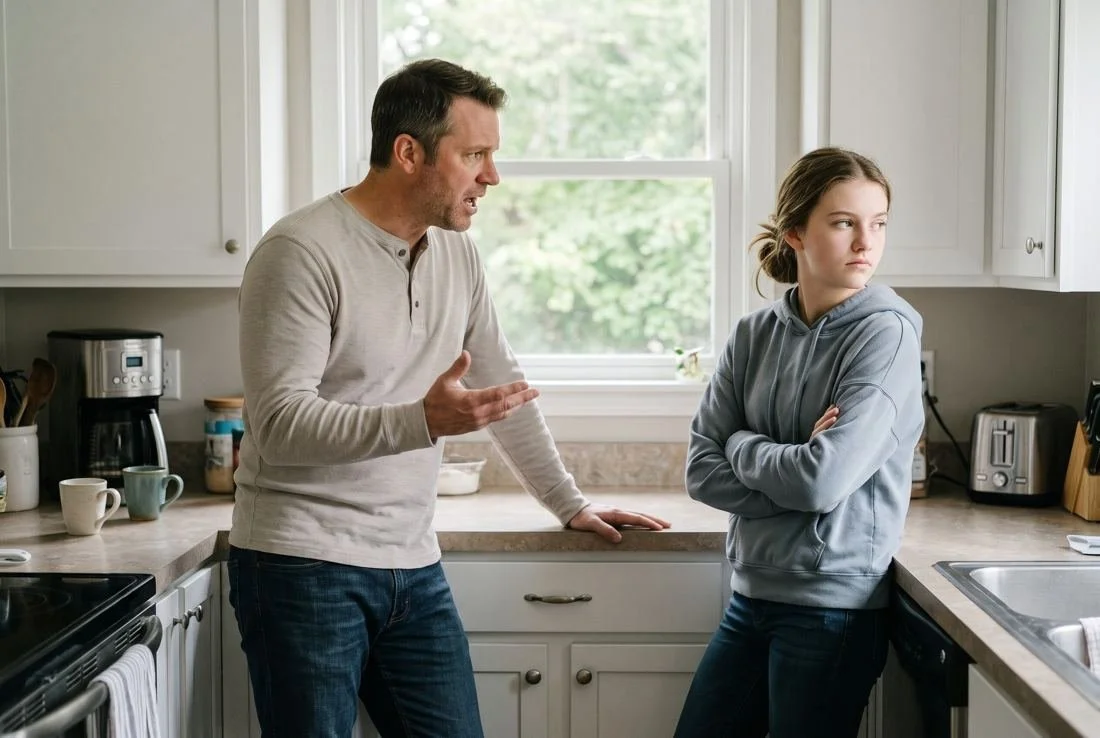
We pause, think, and choose what to do.
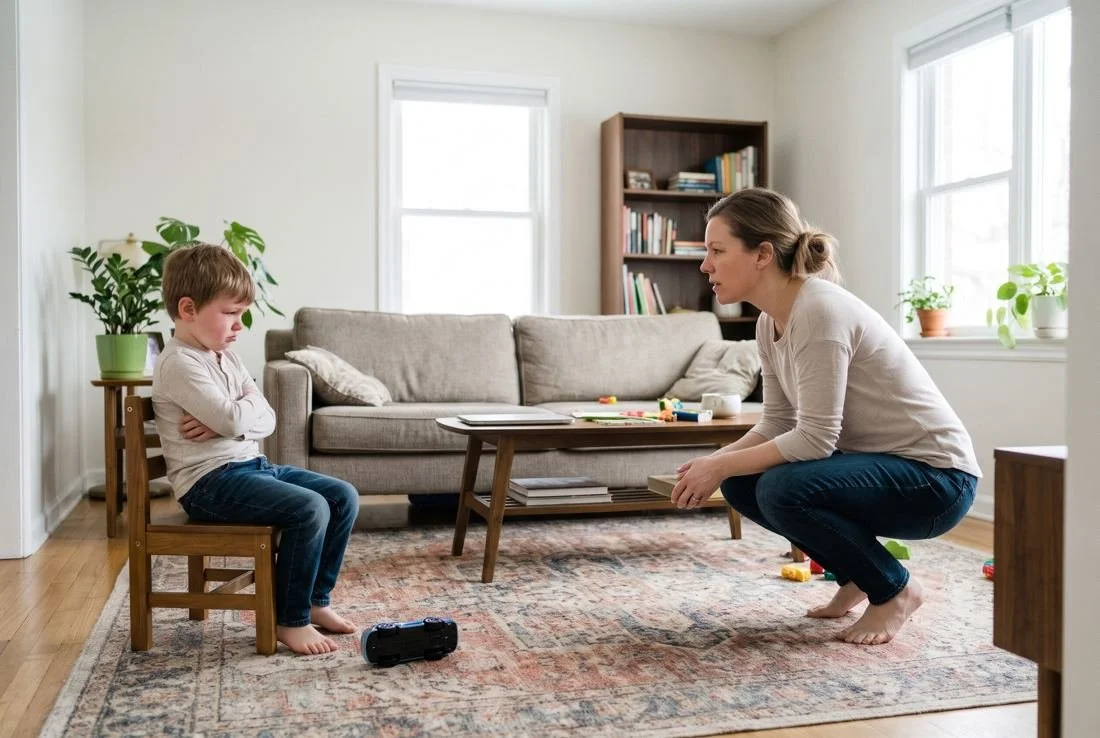
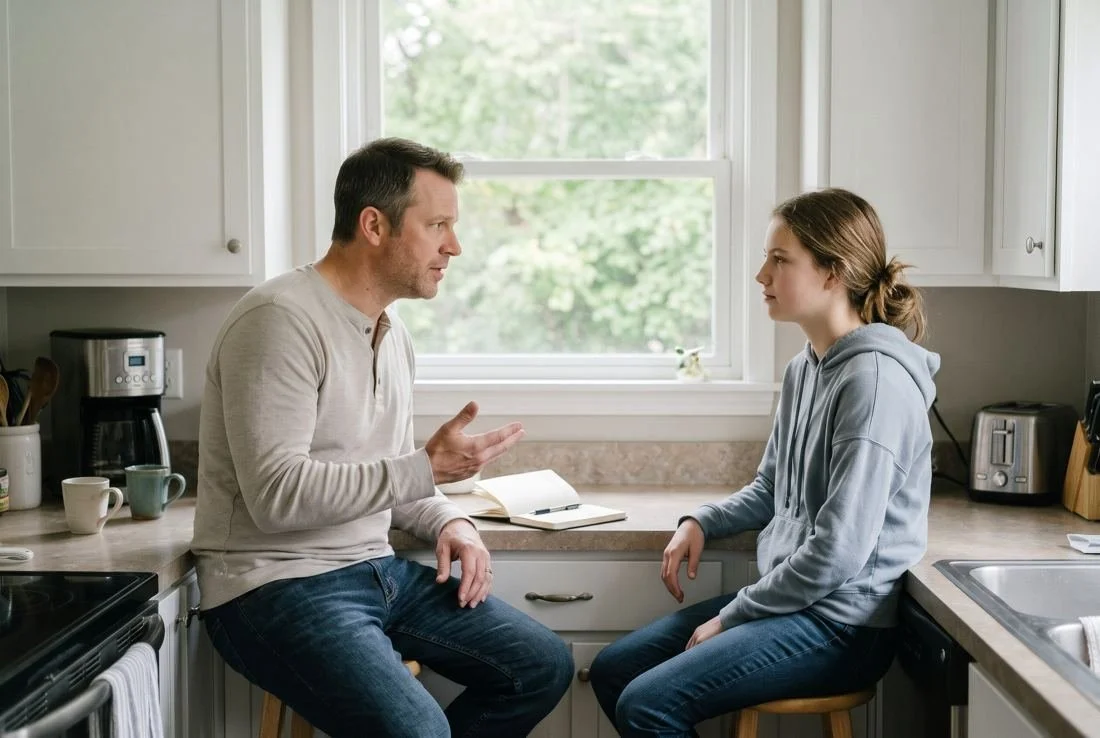
When our kids push our buttons, at any age, it's easy to react. Responding means you pause, think, and choose what to do.
Nothing has ever been created that wasn't first thought through and planned. The same is true in your home. A calmer family starts with a plan.
“You're not alone with what you're experiencing, and you're not a failure for what has already happened.”— Parent Project® Sr. parent
Make a Plan
Three steps: 1. Pause → 2. Plan → 3. Implement
Pause.
Sometimes we think we have to jump in and fix a problem right away. But when we jump in, our emotions often get the better of us. It's okay to take a time out. Let your child know you'll deal with it when you can both do it in a calm and loving way.
If your child is yelling or throwing a fit, don't keep going. Calmly say:
“You need to sit in time-out until you are able to calm down. Take as much time as you need.”
Won't sit? “As soon as you are sitting in time-out, I can start the time. Until then, no toys, TV, or tablet.”
“I can see you are upset. I think you need some time to calm down, and then we can continue this conversation. But until then, you have lost all of your privileges. Let me know when you are ready to talk in a calm way. Take as much time as you need.”
Privileges stay off until you have finished a calm conversation together. That gives your child a reason to come talk. Then privileges come back, or the clock on a grounding starts.
Then simply refuse to argue or engage until they have calmed down.
Plan. Ask yourself:
What is the one behavior that matters most?
Name the specific behavior and how you feel about it (scared, sad, worried). Stick to what you can see and hear, not attitude.
Hitting, biting, throwing things, not following directions
Cussing, threats, intimidation, sneaking out
Start with what matters most. Eye-rolling or a messy room can take a back seat.
What will I say?
Keep it short. Start with love. Your child is motivated by emotion, not logic, so a long explanation won't convince them. They learn by feeling the weight of their choices, good and bad. With a young child, a sentence or two is plenty.
What will I do if it keeps happening?
Be consistent. Use a positive consequence (rewards) for good choices and a negative consequence (loss of fun stuff) for bad ones, every time.
Implement your plan.
Talk when you're both calm. Read what you wrote if you need to. Kids are very good at getting us off topic. It's okay to say:
“I love you so much that I wrote some things down so I can best express how I'm feeling and what I want to happen.”

Which class fits your family?
Parent Project® Sr.
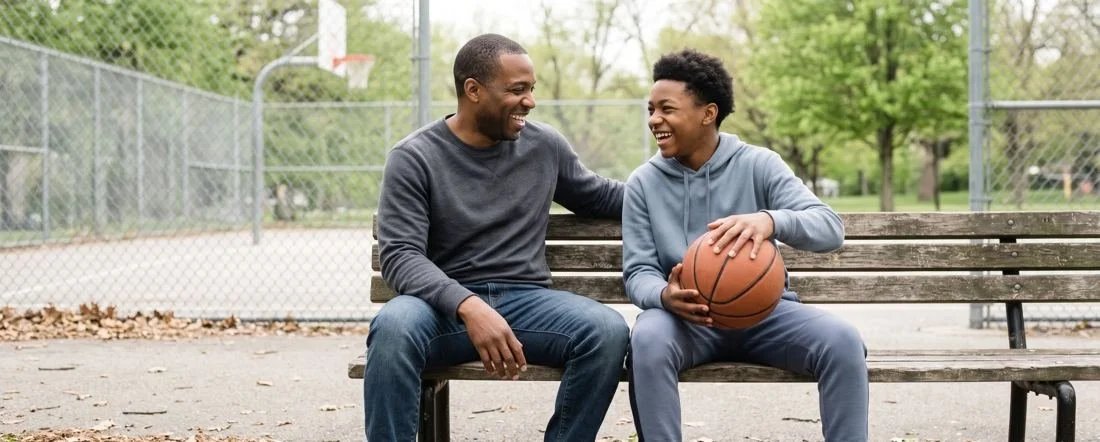
Helpful for challenges like:
- Arguing, defiance, or disrespect
- Skipping school or failing grades
- Drugs or alcohol
- Phones, social media, or gaming
- Unsafe friends
No major problems? This class is for you too. Learn tools now that help prevent problems later.
“It will help prevent problems even if they aren't having any.”— Parent Project® Sr. parent
10 weeks on Zoom · Practical skills · Parents who understand
Loving Solutions®

Helpful for challenges like:
- Tantrums and meltdowns
- Not listening or following rules
- Trouble at school
- Struggles with focus or attention
- Bedtime and routine battles
Things going well? Start early. Build strong habits now, before problems start.
“This is great for the behaviors you just don't know what to do about.”— Loving Solutions® parent
10 weeks on Zoom · Practical skills · Parents who understand
Not sure which one? Call or text (317) 399-5332.
Three Things to Try This Week
You don't have to have it all figured out. Start with these three small steps.
Say “I love you” every day.
Even after a hard day. Even if they don't say it back.
When things heat up, take a time out.
Calmly say:
AGES 4–10“You need to sit in time-out until you are able to calm down. Take as much time as you need.”
AGES 11–18“You have lost all of your privileges until you are able to talk with me in a calm and respectful voice. Take as much time as you need.”
Then step away until they are calm.
Pick just one behavior to focus on.
Let the small stuff go for now, but consistently apply negative consequences for broken house rules.
The rest, we'll learn together in class.
“I wrote it out, did it just like they taught us… I didn't lose my cool. It was a good conversation.”— Parent Project® Sr. parent
Help Is Available
 Groff & AssociatesCounseling · Telehealth · Children, teens, and families317-474-6448
Our classes work alongside counselors, schools, and other helpers. They don't replace them.
Your Next Step
Call or text us
(317) 399-5332When you reach out, we'll:
- Listen and answer your questions
- Help you find the right class
- Never pressure you
Not ready to call or text?
Send us an email, even just to ask a question: info@parentingsolutionsnow.org
“All hope is not lost.” — Parent
Yeah, but…